We spoke with Sanjeeta Sharma Pokharel, winner of the Grand Prize at the Editage Grant 2025, about her joy at receiving the award, her research, and her thoughts on applying for the grant.
Sanjeeta Sharma Pokharel’s Profile
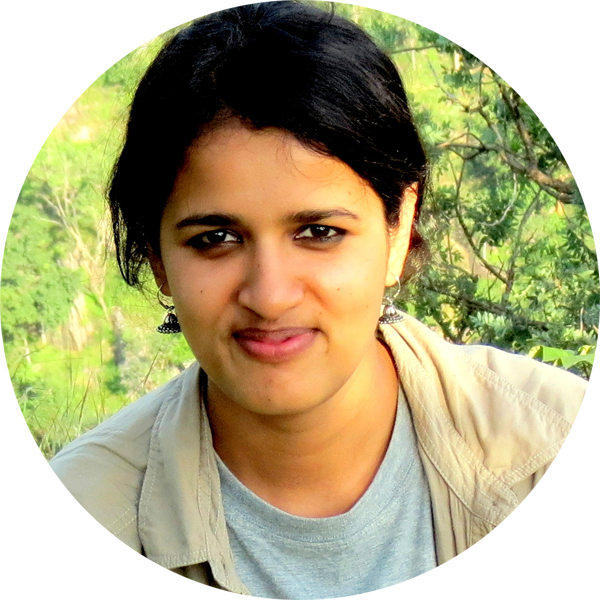
An elephant biologist driven by a deep curiosity about how life adapts in a rapidly changing world. For over a decade, her research has focused on both wild and captive Asian elephants, exploring the physiological mechanisms that enable large mammals to adapt. After earning her PhD in elephant ecology at the Indian Institute of Science, she gained further research experience through postdoctoral training at international institutions, including the Smithsonian Conservation Biology Institute, and as a JSPS Postdoctoral Fellow at Kyoto University. Currently serving as a Hakubi Assistant Professor and Hakubi Fellow at Kyoto University, her research extends beyond living elephants to both extinct and extant proboscideans, with the goal of understanding adaptation across evolutionary timescales and contributing to biodiversity conservation in the Anthropocene.
About the Award-Winning Research
My research that received the Editage Grant Grand Prize focuses on understanding physiological adaptations in both extant and extinct proboscideans. Over the past decade, my work has demonstrated that large mammals such as Asian elephants display significant physiological plasticity, allowing them to adjust to rapidly changing ecosystems. These findings reveal not only the resilience of living species but also provide a scientific framework to ask deeper evolutionary questions. Building on these insights, I am now extending my research into the past, exploring whether extinct proboscideans also exhibited similar physiological mechanisms. In a sense, I am using knowledge from the present to illuminate the past. By integrating modern physiological tools with evolutionary perspectives, I aim to reconstruct how these ancient mammals responded to environmental challenges. In the long term, this research has the potential to help us better understand, or at least approach, the complex causes behind extinction events. Ultimately, I hope that learning why some species got extinct while others survived will provide valuable lessons for conserving biodiversity in the current context.
My Thoughts on Winning the Editage Grant 2025 Grand Prize
Winning the Editage Grant Grand Prize has been one of the most inspiring and affirming moments of my academic journey. Coming from Nepal and pursuing my passion for science across countries and cultures, this recognition felt deeply meaningful, not only as an award, but as a reflection of years of perseverance, curiosity, and commitment to research. It was incredibly rewarding to know that the judging panel saw value and promise in my work, and that the questions I have dedicated myself to exploring resonate beyond my own field. What made the experience even more special was the opportunity to hear the research stories of my fellow awardees. Each story was a reminder that science, at its heart, is driven by curiosity: a simple desire to understand the world better. Seeing how diverse journeys and ideas can create impact was profoundly motivating. It reinforced my belief that curiosity-driven research, when pursued with passion and sincerity, has the power not only to advance knowledge but also to inspire others.
About My Research
My research has primarily involved extensive fieldwork across diverse and often challenging landscapes in India, where studying elephants requires both physical endurance and patience. I observed wild elephants from safe distances and collected dung samples to analyze hormone metabolites and better understand their physiological responses. Fieldwork in forest habitats was particularly demanding due to difficult terrain, poor visibility, and the constant need for caution around large wild animals. In human-dominated landscapes, I often began work before dawn to monitor elephants foraging on crops, requiring an understanding of both elephant behaviour and human–wildlife interactions. These experiences provided important insights into how elephants survive in rapidly changing environments. In Japan, my work expanded to collecting tail hair samples from captive elephants and fossil samples from museum collections.
Growing up in Nepal, where people and wildlife closely share landscapes, I became interested early on in how human activities influence wildlife ecology and conservation. During my Master’s studies, I examined how winter recreational activities such as skiing affect bird biodiversity in alpine meadows, and later contributed to research on human impacts on gharial habitats. During my PhD, I focused on one of the most complex human–wildlife relationships: that between elephants and people. While many studies addressed conflict mitigation and human livelihoods, I became interested in how these conflicts affect elephants themselves. This led me to investigate the physiological impacts of human–elephant conflict on wild Asian elephants, particularly the hidden biological costs of living in human-dominated landscapes.
In the future, I hope to continue advancing research on elephants and their evolutionary ancestors to better understand adaptation, ecology, and behavior across environmental and evolutionary timescales. By integrating studies of living species with fossil evidence, I aim to uncover broader biological principles about how large mammals respond to ecological pressures. I also hope to extend these approaches to other species in order to develop a more comprehensive understanding of adaptation across taxa and environments. Ultimately, my goal is to contribute knowledge that bridges evolutionary biology, ecology, and conservation science, supporting evidence-based conservation in a rapidly changing world.
Reasons for Applying for the Editage Grant
I heard about the Editage Grant from the Kyoto University Office of Research Acceleration (KURA). When I learned about the previous awardees and their research, I was genuinely inspired by both the scientific quality and the broader impact of their work. Seeing how the Editage Grant has supported researchers in advancing meaningful projects motivated me to reflect on how similar support could help elevate my own research to the next level. I believe that the financial support from the Editage Grant would enable me to expand my work in multiple directions, strengthen the rigor of my research, and explore new opportunities that might otherwise be difficult to pursue. In addition, the positive comments I received from the judge panel during the interview were extremely encouraging. Their feedback reinforced my confidence in the value and potential impact of my research, and it further motivated me to continue striving for excellence. Another aspect that strongly attracted me to this grant is the flexibility in how the funds can be used to support ongoing research activities. This adaptability is particularly important for research that evolves over time, allowing me to allocate resources where they are most needed to maximize outcomes.
Challenges and strategies I encountered when applying for the grant
No, I did not experience any particular difficulties during the application process. I had already developed a clear research concept prior to applying, which allowed me to focus on presenting my ideas thoughtfully and creatively. The structure of the application also made it straightforward to communicate the objectives and significance of my work in a coherent way. In fact, as a researcher who works primarily in English, I found the process especially accessible and comfortable to navigate.
My Thoughts on Applying for the Editage Grant
What impressed me most about the Editage Grant was how straightforward the application process was. In many traditional grant programs, the application procedures can be quite complex and involve multiple administrative steps, which sometimes create barriers, especially for early-career researchers who are balancing numerous responsibilities. In contrast, I found the Editage Grant application process to be straightforward, well-structured, and researcher-friendly. This simplicity did not reduce the quality or seriousness of the program; rather, it demonstrated a thoughtful design that respects researchers’ time while still allowing them to effectively communicate the value and potential impact of their work. The ease of applying made the opportunity feel more inclusive and approachable, which further encouraged me to submit my application with confidence.
The overall experience was incredibly encouraging and memorable. When I received the first email informing me that I had been shortlisted among the top 10 candidates, I felt truly honored and excited. Being selected for the interview stage further motivated me. The interview itself was particularly inspiring. Having the opportunity to present my work before such distinguished scientists in Japan, and receiving thoughtful, highly motivating comments and appreciation from them, was a deeply meaningful experience. Their feedback not only validated my research direction but also encouraged me to aim higher and continue striving for excellence. The award ceremony was equally exciting and rewarding. Meeting other awardees, interacting with the judging scientists, and engaging in discussions about research ideas created a stimulating academic environment. Receiving direct feedback from respected experts on my work was one of those rare academic moments that has left a lasting impact.
My thoughts as a young researcher
As a young researcher at the beginning of my academic career as an assistant professor, I feel a strong sense of hope and possibility. This stage represents a unique transition, moving from being primarily a learner to gradually becoming an independent contributor to knowledge. While there are certainly challenges, opportunities such as research grants and academic recognition are incredibly encouraging and reinforce the belief that our ideas and efforts have value. I also feel that this is a time of immense exploration. There is still so much to discover, investigate, and understand, and being surrounded by the work of established researchers in my field is both humbling and motivating. Their achievements inspire me not only to deepen my own research but also to contribute in ways that can inspire future researchers to enter the field.